Cybersecurity Services in Nebraska: Why Your Clinic’s Backup is Failing Your Patients
If you run a healthcare clinic in Omaha or Lincoln, you’ve probably been told you’re "covered" because you have a backup. You pay a monthly fee, a little green light blinks on a server or a dashboard, and you sleep fine at night.
Here is the uncomfortable truth: A backup is not a plan. It’s a box of parts.
If your systems go dark at 8:00 AM on a Monday, having a backup doesn’t mean you’re seeing patients at 8:15 AM. It means you’re spending the next three days trying to rebuild your digital house from a pile of bricks while your waiting room sits empty and your staff sits idle. In 2026, Nebraska healthcare providers are realizing that "recovery" is a reactive, slow, and expensive way to handle a crisis.
The industry is shifting. We’re moving toward Operational Continuity.
At SAINT Technology Services, we see it every day. Clinics are under more pressure than ever. Costs are up, reimbursements are tighter, and the threat of ransomware is no longer a "maybe": it’s a "when." You don't need a backup. You need a way to keep working while the world is on fire.
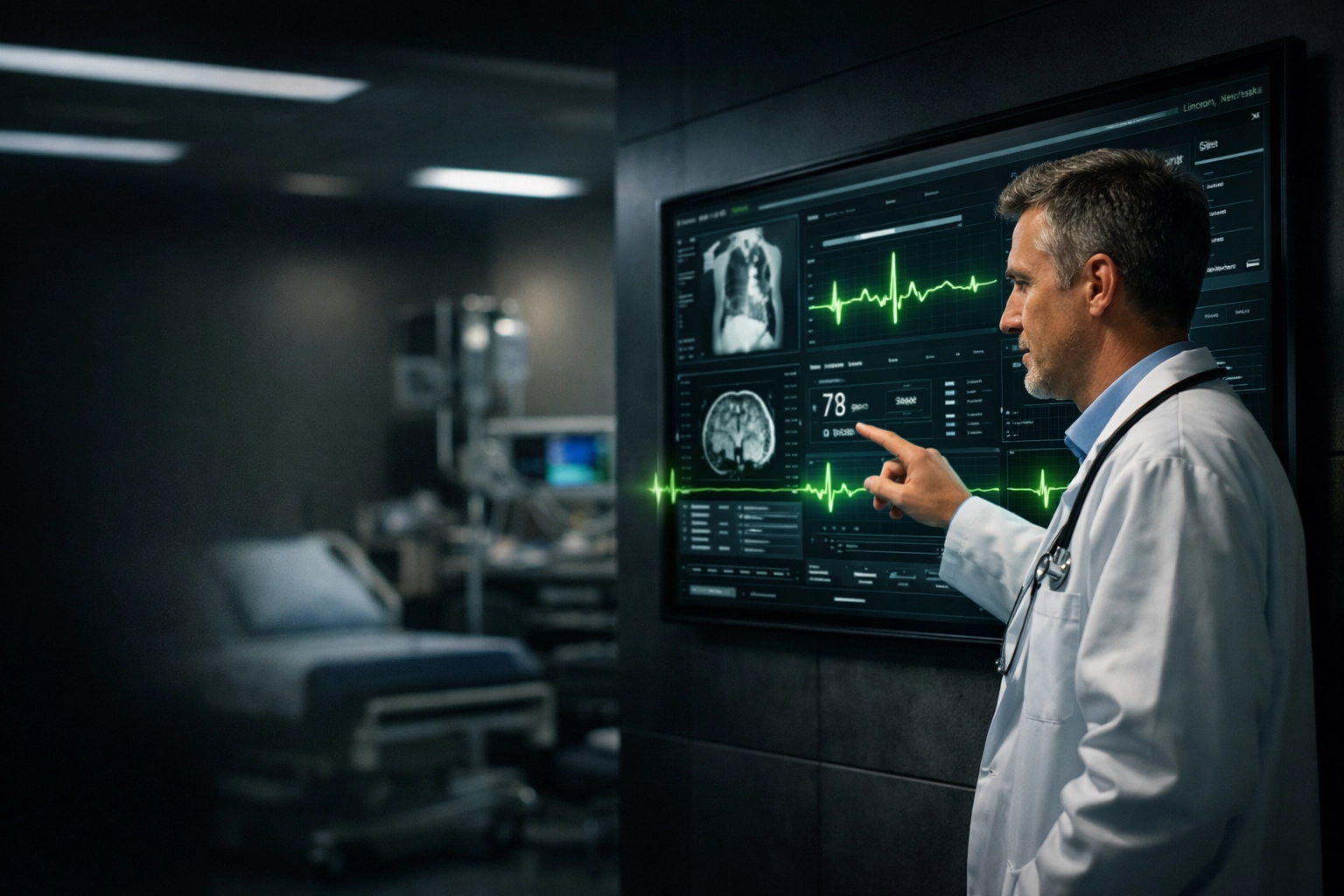
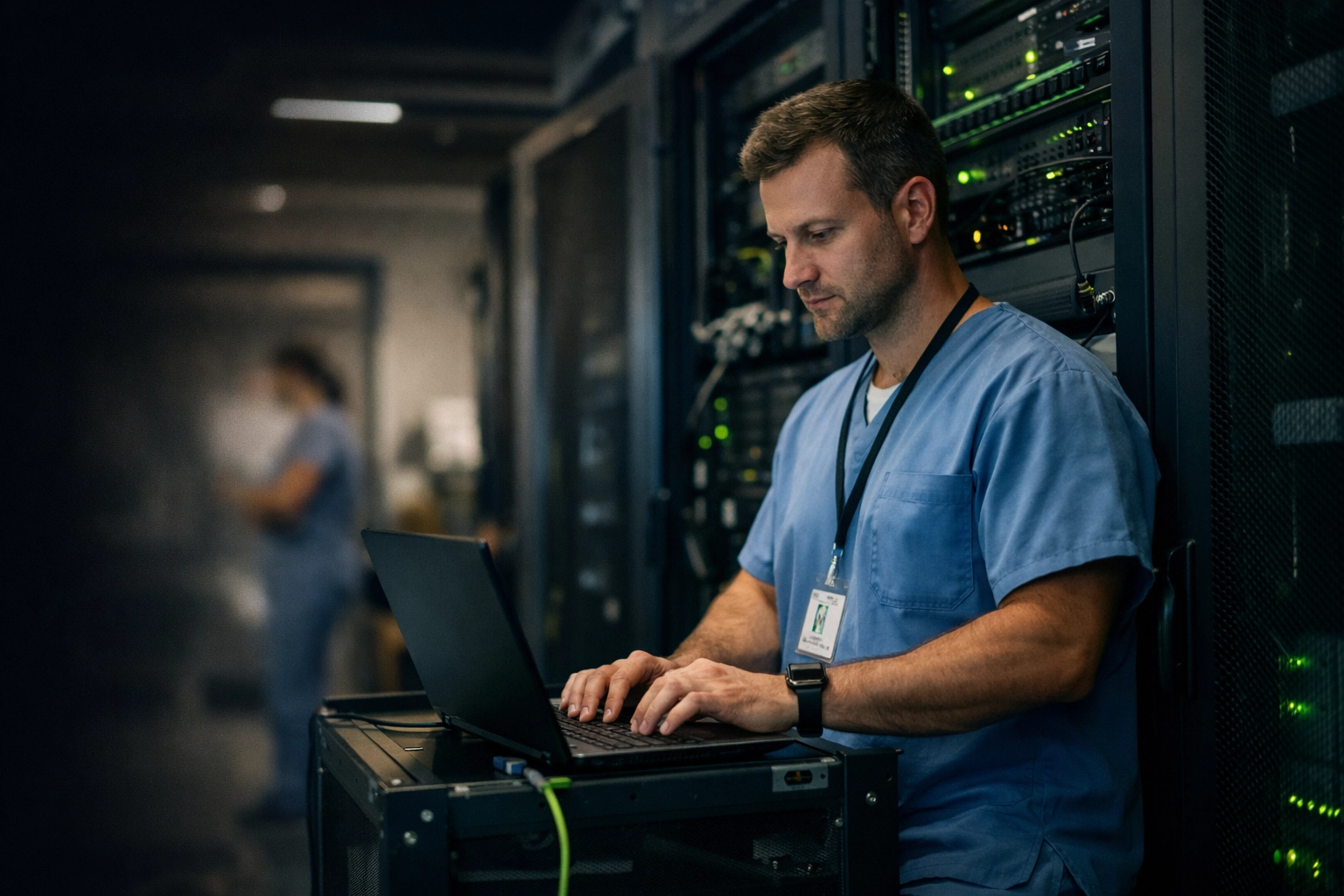
Hyper-realistic Nebraska healthcare clinic setting, modern diagnostic screens, professional dark-mode aesthetic, neon green (#a6ff00) digital pulse/data lines.
Operational Continuity vs. Backups: The Difference Between a Pause and a Full Stop
Most cybersecurity services in Nebraska focus on the wrong metric. They focus on data preservation. We focus on uptime.
A backup is a copy of your files stored somewhere else. Operational Continuity is a redundant system that can take over the second your primary system fails. Think of it like a backup generator for a hospital. When the power goes out, the lights don't stay off for three days while you call the electric company; the generator kicks in within seconds.
In a clinical environment, this matters for two main reasons:
- Recovery Time Objective (RTO): How long can you afford to be down? If your EMR is offline, can you still treat patients? Can you access charts? Most clinics find that if they are down for more than four hours, the financial and reputational damage starts to snowball.
- Recovery Point Objective (RPO): How much data can you afford to lose? If your last backup was at midnight and your system crashes at 4:00 PM, you just lost eight hours of patient notes, vitals, and billing data.
In Lincoln and Omaha, we’re seeing clinics ditch the "once-a-night" backup for real-time synchronization. If one server fails, another one: either on-site or in the cloud: picks up the slack. Your staff might not even notice a glitch. That’s continuity.
HIPAA Compliance in 2026: Availability is as Critical as Privacy
We all know the "P" in HIPAA stands for Portability, but most people focus on the Privacy. However, the Security Rule specifically requires the "Availability" of Protected Health Information (PHI).
If a patient comes into your Omaha clinic with an emergency and you can’t access their records because your server is locked by a virus, you aren't just having a "tech issue." You are failing to meet the federal requirement for data availability.
Ransomware protection for small business isn't just about keeping hackers out; it's about ensuring that the care you provide isn't interrupted. In 2026, the Office for Civil Rights (OCR) isn't just looking at whether you leaked data: they are looking at whether you had the discipline to ensure that data was accessible when it was needed most.
At SAINT, we build our managed IT services in Lincoln, NE around this reality. We don't just "check a box" for HIPAA. We build infrastructure that treats uptime as a clinical necessity.
Ransomware Protection for Small Business: Defending the Nebraska Heartland
Nebraska is no longer "under the radar" for cybercriminals. In fact, rural and mid-sized clinics are often preferred targets because hackers assume their security is outdated. They assume you're still relying on a "band-aid" IT fix from a guy who only shows up when something breaks.
Effective ransomware protection for small businesses in the healthcare space requires a multi-layered approach:
- Immutable Backups: These are backups that cannot be changed, deleted, or encrypted by a hacker. Even if they get into your main system, they can't touch your lifeline.
- Endpoint Detection and Response (EDR): Traditional antivirus is dead. You need AI-driven tools that recognize the behavior of a threat and shut it down before it can spread.
- Employee Training: Your front desk is your strongest: or weakest: link. They need to know what a phishing attempt looks like before they click that "invoice" attachment.
We don't do "maybe" security. We do real cybersecurity that is active 24/7/365. We monitor the pulse of your network so you can focus on the pulse of your patients.
The Cost of a "Dark" Clinic in Omaha and Lincoln
Let's talk numbers. This is where the "Fatherly" pragmatism of SAINT comes in.
When your IT fails, you aren't just losing the cost of the repair. You are losing:
- Provider Revenue: If your doctors can't bill, you're losing thousands of dollars per hour.
- Staff Overhead: You’re still paying your nurses, techs, and receptionists to sit in a dark office.
- Patient Trust: Patients talk. If they show up for an appointment and get turned away because "the computers are down," they might look for a clinic that has its act together.
In Nebraska, where many hospitals and clinics are already facing financial pressures and rising costs, you cannot afford a "black swan" event that shuts you down for a week. Operational continuity is an investment in your clinic's survival.
The Convergence of Care: Physical Security Meets Digital Integrity
Healthcare clinics are unique because they face physical threats just as much as digital ones. This is where the concept of Convergence: one of SAINT’s core pillars: comes into play.
Your server room needs to be locked. Your medicine cabinets need to be monitored. Your hallways need eyes. In 2026, these things are no longer separate from your IT. Your access control and CCTV surveillance systems should live on the same secure, monitored network as your medical records.
Why? Because if a disgruntled ex-employee can walk into your server room, it doesn't matter how many firewalls you have.
We provide physical security systems in Nebraska that integrate directly with your IT strategy. One partner. One point of accountability. One unified shield around your practice.
Why SAINT Technology Services?
We aren't your typical MSP. We are a veteran-owned, Nebraska-rooted team that values discipline and transparency. We don't hide behind technical jargon. We don't send you surprise bills.
We believe in a flat-rate model because we want our incentives to align with yours. If your systems are down, we're working for free. That means we have every reason to make sure they never go down in the first place.
Whether you're a multi-specialty group in Omaha or a small family practice in Lincoln, your mission is the same: providing the best care possible. Our mission is to make sure the technology you rely on is as resilient as the people using it.
Let’s Fix It Before It Breaks
Don't wait for a ransom note to appear on your screen to find out if your backup actually works. Let’s look at your infrastructure now and build a bridge to operational continuity.
If your business in Lincoln or Omaha is dealing with slow systems, downtime, or unreliable IT support : SAINT fixes it before it becomes a problem.
Ready to secure your clinic?
Explore our Managed IT Services or Get a Cybersecurity Consultation today.