Skip to content
VETERAN-OWNED · NEBRASKA-BASED
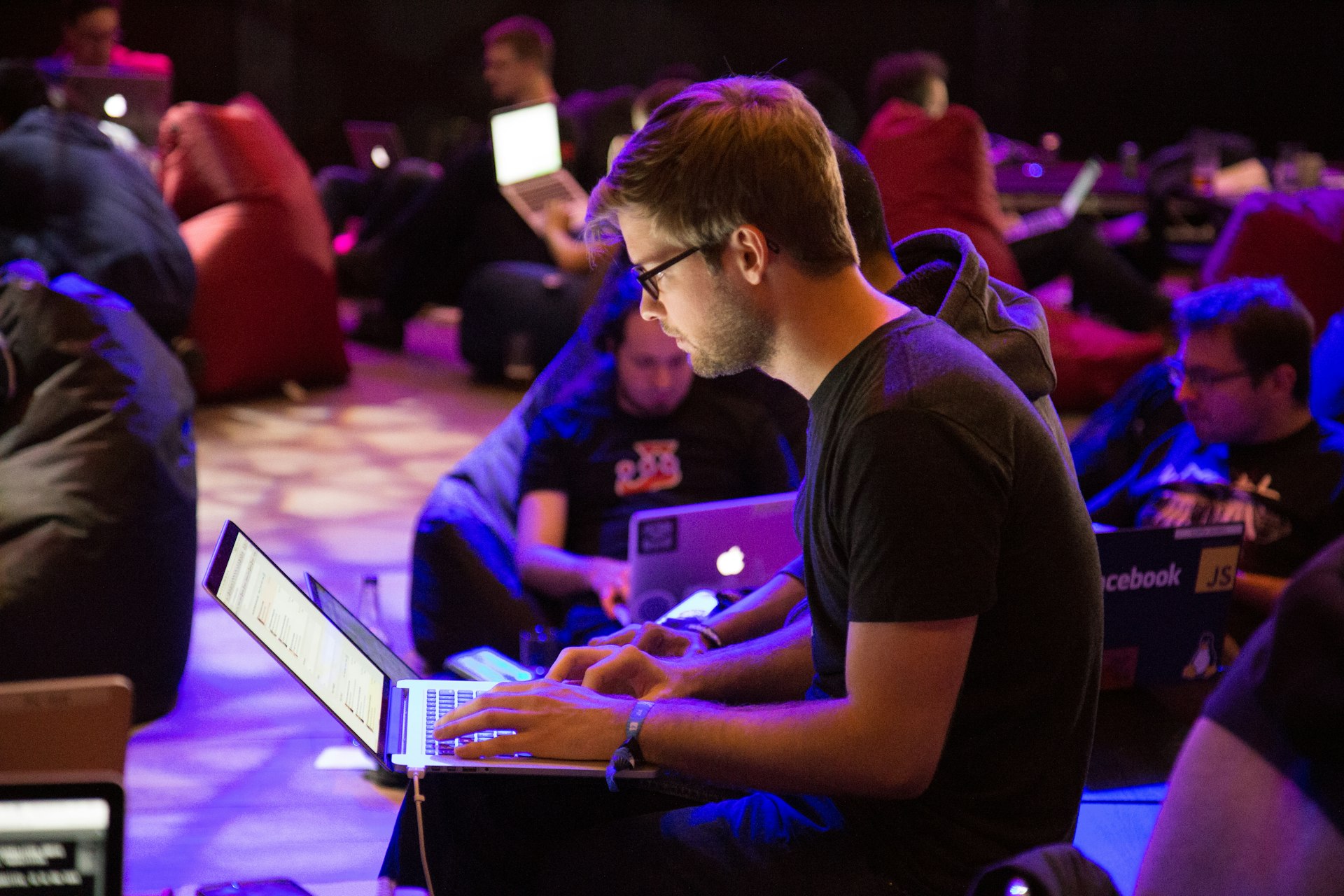
IT professionals working on laptops in a dim collaborative workspace

Outsourced help desk for Omaha and Lincoln

Help desk service in Omaha and help desk in Lincoln for small and mid-size businesses that need a real technician — without hiring internal IT or signing an enterprise MSP contract sized for a 200-seat company. Named people. A 15-minute first-response target. Per-seat fixed pricing. Hickman-based. Call 531-625-2111. When a workstation or mailbox is down right now, start with IT support in Omaha or IT support in Lincoln. This page is the ticket desk.
  • Named technicians — not a call-center script
  • 15-minute first-response target (business hours)
  • Per-seat fixed monthly rate inside documented scope
  • After-hours line for outages & suspected compromise

Big-MSP help desks were not built for a 20-person Lincoln office.

Ticket queues, offshore scripts, and contracts sized for 200-seat companies. That’s the product most “outsourced help desk services” actually sell.

When Outlook dies in a Haymarket suite or a West Omaha clinic, the national desk puts you in a queue, reads a script, and opens a ticket that ages until someone who has never seen your tenant is free. Small and mid-size businesses in Lincoln and Omaha pay for that theater because the alternative looked like hiring a full-time person — salary, benefits, tools — who still can’t cover vacation, 2 a.m. outages, or a suspected compromise.

SAINT is a founder-led desk in Hickman, not a franchise NOC. Help desk for small business here means the technician who answers already knows whether you run Microsoft 365 or Google Workspace, which building is which, and when the problem is an outage versus Huntress or Guardz containment. IT help desk support in Lincoln NE is a 15–20 minute drive when the hardware is actually dead. IT help desk Omaha is the same number, remote first, scheduled I-80 when a person has to be in the room. No Omaha office.

A desk, not a ticket abyss.

  • 01

    Named-technician support

    A small founder-led team that already knows your tenant — not a rotating offshore script and not a national call-center tier-1. The person who answers has context because we documented, deployed, and maintain the environment.
  • 02

    15-minute first-response target

    Business-hours target for initial response. Not a contractual SLA. After-hours outages: 531-625-2111. Suspected compromise: (531) 625-2113 — not every “Outlook is slow” ticket at 11 p.m.
  • 03

    Per-seat fixed pricing

    Documented per-user monthly rate. No per-ticket charges inside that scope. When hourly is the honest model, we bill in 15-minute increments. Rules live on /pricing; formal numbers follow an assessment.
  • 04

    Escalation path

    Password resets don’t sit in the same bucket as a suspected mailbox takeover. We document who owns what, when it leaves the queue for senior review, and when Huntress or Guardz containment is the fork — not a password reset and a prayer.
  • 05

    After-hours coverage for outages

    True emergencies — email down, a site offline, suspected compromise — route 24/7. Standard tickets wait for business hours. That distinction is the point of a small desk, not a 200-seat NOC pretending every ticket is P1.

Fully outsourced, or overflow beside the person you already have.

Pick the model that matches who answers the phone today — not a package named after a city.

Fully outsourced

No internal IT staff

You don’t have a sysadmin, and you don’t want to hire one. We take the queue, the tenant, and the after-hours outage line. Day-to-day tickets plus the monitoring and patching that keep the same fires from coming back — that’s managed IT, with this desk as how it shows up on a Tuesday. Something broken tonight: /it-support.

Overflow / co-managed

Supplement an internal IT person

You already have someone. They should not be the 2 a.m. pager, the vacation blackout, and the overflow queue. We sit beside them — shared ticketing, after-hours outages, surge coverage — without a takeover. That is co-managed IT. We do not run a branded white-label help desk program for other MSPs to resell under their logo. Overflow for other IT teams is the honest product.

Comparison

Internal hire vs big MSP vs SAINT help desk

Qualitative differences buyers actually ask about. Dollar amounts live on /pricing and planning tiles on /pricing— we will not invent a fake help-desk SKU price here.

Internal hireBig MSPSAINT help desk
CostFull-time salary, benefits, tools, and coverage gaps when that person is outEnterprise packages sized for 200-seat companiesDocumented per-seat fixed monthly rate — see /pricing. No invented starting price here.
ResponseDepends on one person being at a deskTicket queues, often hours or next business day15-minute first-response target during business hours (target, not a bound SLA)
FlexibilityVacation and sick days = no deskRigid tiers, offshore scripts, take-it-or-leave-it scopeFully outsourced, or overflow / co-managed beside your IT person
Contract lengthEmployment — hard to unwindMulti-year enterprise paperDocumented scope. Not a 200-seat MSP contract. T&M in 15-minute increments when that’s honest.

Help desk questions we actually get

How does help desk pricing work?+
Help desk is billed as a documented per-seat (per-user) fixed monthly rate when that’s the honest model — no per-ticket charges inside the written scope. Time-and-materials is billed in 15-minute increments when a fixed package would be fiction. We do not invent a starting price on this page. See /pricing for engagement rules and /book for planning catalog numbers. Formal numbers follow an assessment.
How long does onboarding take?+
Assessment call to a documented proposal is typically 5 business days. Full onboarding — environment documented, Syncro agents deployed, ticketing live, who-to-call list in your team’s hands — is usually 14–30 days depending on size and how messy the inheritance is. We do not run a six-month discovery theater.
What counts as a help desk ticket?+
In-scope tickets are the day-to-day work that keeps people working: password and MFA issues, Outlook / Microsoft 365 or Google Workspace problems, slow or crashing workstations, printers, shared drives, and access to software you already run. Out of scope: hardware procurement, large projects, and anything we didn’t write into the engagement. Those are quoted before they happen. No per-ticket meter inside the documented scope.
Is support remote or on-site?+
Most tickets close remote — identity, email, and software do not need someone in your office. We come on-site when the job is a dead workstation, a network closet, cameras, or door access. Headquarters is Hickman, Nebraska (city-level only, no public street). Lincoln is typically 15–20 minutes; Omaha-metro is a scheduled 55–70 minute I-80 trip. We do not have an Omaha office.
Do you offer white-label help desk?+
We do not run a branded white-label program that other MSPs resell under their logo. If you have an internal IT person — or you’re another shop that needs a backstop — that’s overflow / co-managed: your team keeps the relationship. See /co-managed-it.
Is the 15-minute first response a contractual SLA?+
No. It is a first-response target during business hours, not a legally binding SLA. After-hours outages use 531-625-2111. Suspected compromise uses Incident Now at (531) 625-2113 — not a 24/7 queue for every printer ticket. We’re a small founder-led team and we tell you that up front.
Do you provide IT help desk support in Lincoln NE and Omaha?+
Yes. Same desk, same 531-625-2111 line. Lincoln same-day on-site is realistic because Hickman is a short drive. Omaha is remote-first with scheduled on-site. See the Lincoln hub and the Omaha hub. Computer support — IT support in Omaha or IT support in Lincoln— lives on that page when a workstation or mailbox is down, not on this ticket desk.
Do you offer a help desk service in Omaha?+
Yes. Help desk service in Omaha, helpdesk service in Omaha, and Omaha helpdesk coverage are this page. Same 531-625-2111 line as Lincoln. Remote-first across Aksarben, West Omaha, Midtown, and Old Market. Bellevue and Papillion are service area, not branch offices and not separate help-desk URLs. On-site is a scheduled I-80 trip, typically 55–70 minutes, when the hardware is actually dead. No Omaha office. Outsourced IT services in Omaha, when you want the queue and not a one-off visit, are this desk — fully outsourced, or overflow beside an internal person.
Do you offer help desk in Lincoln?+
Yes. Help desk in Lincoln is this same desk. Haymarket through south Lincoln, Hickman-based, no Lincoln storefront. Most tickets close remote. When a workstation is dead, the drive is typically 15–20 minutes. Outsourced IT in Lincoln is this page when you want named technicians and a 15-minute first-response target during business hours — a target, not a contractual SLA.
Is outsourced IT in Omaha the same thing as IT support?+
No. Outsourced IT in Omaha on this page means the help desk: tickets, named technicians, a documented per-seat rate inside scope, and after-hours coverage for outages. IT support in Omaha and IT support in Lincoln — computer support, a down workstation, email that will not send — are the other page. Use this page when you want the desk.

Lincoln vs Omaha — same desk, different drive

  • Help desk in Lincoln — Haymarket to south Lincoln.

    A 12–40 person office, one tenant, Outlook down before a hearing or a clinic open. Most tickets close remote. When the workstation is dead, Hickman-to-Lincoln is 15–20 minutes — not a national dispatch queue. No Lincoln storefront.

    Lincoln, NE hub
  • Help desk service in Omaha — which building, which tenant.

    Multi-site is the Omaha rule: Aksarben or West Omaha HQ plus a Papillion warehouse. We triage identity and mail flow remotely, then schedule I-80 if the hardware is actually dead. No Omaha office. Same 531-625-2111 line.

    Omaha, NE hub

Get a help desk that knows your tenant.

Thirty minutes. NIST-aligned report. No obligation. Hickman-based; Lincoln and Omaha markets. 531-625-2111.

How a job with SAINT actually starts

This page is one part of the stack. The desk behind it is the same small team for the computers, the security tools, and the building. Lincoln is the day-to-day market. Omaha is next. The rest of Nebraska is scheduled.

SAINT Technology Services is the trade name of SAINT Management Group LLC. We are veteran-owned and based in Hickman, Nebraska. There is no Lincoln storefront and no Omaha headquarters. If someone needs a person on site in Lincoln, the drive is short. Omaha is a planned trip. We say that up front so you are not picturing a downtown office we do not have.

Most of the businesses we sit with are small or mid-size: a clinic, a shop, a professional office, a contractor, a school, a city department, a plant, or a nonprofit. The common thread is that one or two people are tired of being the unofficial IT department. If you already have an IT person and you want to keep them, that is co-managed IT. We write down who owns which tickets. We do not show up to replace someone who is doing the job.

Managed IT, when that is the fit, is a monthly program: monitoring, patching, a help desk, and cloud administration for Microsoft 365 or Google Workspace when those are in scope. The rate is a documented fixed monthly number once the environment is scoped. We do not publish a sticker price on the website, because a five-person office and a fifty-person office are not the same job. The first-response target during business hours is 15 minutes. Outages and security incidents have a 24/7 line. Those are the same targets already stated on the managed IT page, not a new offer.

The help desk is for the ordinary stuff that stops a workday. A laptop that will not join the network, a shared mailbox nobody can open, a printer that quit, a new hire who needs accounts before Monday. You call (531) 625-2111 or you write the desk. If the problem is an active compromise, use the incident path on this site. Do not wait on a newsletter.

Cybersecurity on an engagement is Huntress or Guardz, not a pile of overlapping tools and not a claim that we are a certified auditor. Huntress is the 24/7 SOC path: endpoint detection, identity threat detection, log correlation, and security awareness training when those pieces are in scope. Guardz is the all-in-one path some smaller offices prefer. We pick one lane with you. Email security sits next to that, because business email compromise is how a lot of Midwest shops actually lose money: a changed bank account, a mailbox rule, a fake invoice. We look for those. We do not promise that nobody will ever click.

Physical security is the same team as the network, not a separate vendor you have to introduce us to. That covers cameras, door access, and a look at the building. Verkada, UniFi Protect, and Salient are products we deploy when they fit the site. A jobsite is a different layout than a clinic hallway, and the jobsite security page is where that scope lives. The SAINT Security Box is a custom enclosure we build when a camera needs power and protection that a catalog mount does not give you. We do not invent camera counts or coverage percentages.

Backups are only useful if someone has restored them. The backup and disaster recovery work is monitoring the jobs, keeping a copy that ransomware cannot simply encrypt with everything else, and testing a restore on a schedule you can see. 'We have backups' is not the same sentence as 'we restored a file last quarter.' If you want the checklist version of that, it is on the backup page and in the operations notes.

The network work is design and upkeep: UniFi where that is the right stack, Fortinet when you need that firewall, Wi-Fi that reaches the back office, and a diagram your next IT person can read. Business fiber, when you want it, is ALLO service we provision as an authorized agent. Availability is an address check. We do not publish carrier price lists or promise a speed. Hosted voice, Teams voice, and analog or PRI lines are quoted the same way: one ticket path, after we know the address and what you have now. Failover internet is a design for a second path. The carrier still delivers the circuit.

Website design and website management are on this site as their own pages. Domain management and domain security cover the registrar, DNS, and the locks that keep someone from walking off with the name. None of that is bundled into managed IT unless we wrote it into the scope.

Assessments and the free tools are there so you can see a gap before you buy anything. The domain security scan, the insurability check, the downtime calculator, the breach check, and the short quizzes for NIST CSF, HIPAA, CISA, the FTC Safeguards Rule, and GDPR are educational. They are not a certification and they are not a legal opinion. A security risk assessment, a physical security assessment, a vendor assessment, or a critical infrastructure walk-through is a scoped job with a written result. If a page says the work is advisory, that is what it is.

AI, when it is in scope, is governance and setup. Readiness, a written policy, vendor questions, training for the people who will actually use Copilot or Gemini, and a fractional chief AI officer when an office wants that seat part-time. We will tell you when the honest answer is to leave a feature off. We will not dress up a prompt as a transformation.

A first conversation is short. You call (531) 625-2111 or you book a time. We ask what is breaking, what you already pay for, and who has the admin passwords. Then we look. The output is a written plan: what to keep, what to fix, and what can wait. You can stay with your current provider. We would rather say that on the first call than discover it after a quote. If you want a partner to resell or refer work, that conversation lives on the partner program pages, separate from a customer assessment.

Lincoln pages are the detailed local versions. Omaha pages are the second set. If you are comparing those two, start with the city that matches the building you care about most, then open the service under it. The phone number does not change. Desk line: (531) 625-2111.

If you have more than one building, say so on the first call. A Lincoln office and an Omaha office can sit on one agreement, with the same help desk and a note about which site gets the scheduled visit. A clinic with a guest network and a clinical network is a different drawing than a single retail floor. We would rather see that before we name a tool.

Compliance language on this site is narrow on purpose. HIPAA-aligned IT for a small clinic means identity, email, backups, and a business associate agreement when we touch systems that hold patient information. It does not mean SAINT certifies you. CJIS-aware work for a city or sheriff's office means the access and logging questions in that policy, not a badge. CMMC-aware work for a shop that touches defense contracts means the control list and the evidence, not a rubber stamp. FTC Safeguards and PCI show up the same way: we implement the technical pieces we scoped, and we tell you what we did not take on.

You should leave a first call knowing three things: who answers (531) 625-2111, what is in the monthly scope, and what is a separate project. Projects are the one-time jobs: a camera install, a firewall cutover, a move, a website, a fiber order. The monthly program is what keeps running after the project truck leaves. If a salesperson ever blurs those two, ask for it in writing. We will put it in writing either way.

Bring what you already have. A list of vendors, the admin login for Microsoft 365 or Google Workspace, and a rough count of people and sites is enough to start. You do not need a network diagram. If the last IT company will not hand over passwords, say that. It happens, and it changes the first week of work more than any product choice does.

If you already know the service, use the links on this page. If you do not, start with the solutions list, Lincoln, or Omaha, then call (531) 625-2111 or book a time.